Introduction

Image of Leandro Navarro
Leandro Navarro
Chair

2025 was a difficult year for APC and its members. Funding for civil society organisations became less certain, which showed how exposed we are to outside shifts, as well as how much solidarity and collective resilience matter.

All year, APC supported the affected members while protecting the network's strategic direction and financial sustainability.

Despite this pressure, we kept advancing digital justice, and its links with gender, environmental and social justice. We did it together with members, partners, allies and funders. A network like ours works as a commons: nobody owns it alone, and it lasts only if its members look after it together, with shared rules and mutual trust.

The year showed the value of that collective strength: we can respond to challenges, support one another and pursue a shared vision. You can read more about the progress and impact of this work in the impact section of this report.

Image of Chat Garcia Ramilo
Chat Garcia Ramilo
Director

We began 2025 facing many challenges that very quickly deepened. Funding for digital rights work came under greater pressure, spaces for civil society organising continued to shrink, and diversity, equity and inclusion policies faced significant setbacks.

Globally, we saw the growing weaponisation of digital technologies in war and conflict, increasing concentrations of power through the collusion of authoritarian governments and Big Tech, and the environmental and community impacts of an extractive, colonial model. Disinformation campaigns continued to target human rights defenders and their work.

In this difficult context, we knew that moving forward would require both resilience and stronger alliances. We therefore focused on four priorities: strengthening civil society resistance and solidarity; advancing inclusive digital governance and alternatives; holding technology companies accountable while developing alternatives to authoritarian and corporate control; and strengthening our own network to support civil society organising and resistance.

Looking back, what our community achieved in 2025 is a powerful reminder of what is possible when we work together. Through our staff and network of members and partners, we worked across 63 countries, with focused local work in countries including Bangladesh, Brazil, Cameroon, Colombia, India, Indonesia, Kenya, Lebanon, Malaysia, Mexico, Myanmar, the Philippines, South Africa and Uganda.

Subgranting remained a key part of this work, supporting 206 initiatives in 48 countries, 45 of them in the Global South. These initiatives connected resources with capacity building and collective action, supporting technical and policy outcomes, movement building, gender inclusion and environmental justice.

Behind these numbers are stories of courage, creativity and resistance. Our members and partners supported Indigenous communities across Latin America and the Caribbean, developed free technologies for environmental monitoring in Nigeria and Colombia, and fostered community-centred connectivity across Africa, Asia and Latin America and the Caribbean. We stood with activists in Myanmar, defended digital rights amid the genocide in Palestine, resisted authoritarianism online, in the streets and in the courts, and celebrated the long-awaited release of Egyptian activist Alaa Abd el-Fattah.

We continued building a feminist internet that is safe and free for all, confronting technology-facilitated gender-based violence and bringing shared agendas into spaces where decisions about internet governance and our digital futures are made.

The stories in this report are more than a record of our work. They are part of our collective memory and a reminder of what we can achieve together, even in difficult times. As we look ahead, we carry these experiences with us as a foundation for strengthening collective organising in the coming years.

About APC

Strategies

We believe that our mission is achieved through five interlinked strategies: research, advocacy, building networks and capacity, communications and outreach. To be instrumental to the APC community, research-based evidence must be communicated effectively in order to support advocacy, which then achieves change as its ultimate goal.

Vision

Our vision is for all people, particularly the marginalised, to use and shape the internet and digital technologies to create a just and sustainable world.

Mission

Our mission is to strengthen collective organising towards building a transformative movement to ensure that the internet and digital technologies enable social, gender and environmental justice for all people.

APC’s Strategic Plan 2024-2027

Our strategic plan is the result of a consultative process with staff, the board of directors, members and partners.

We believe that new efforts at organising are necessary to bring actors advocating for digital inclusion and digital and internet rights together, and to connect these with other social movements' agendas.

Network- and movement-building strategies

  • Building knowledge and counter-narratives.
  • Convening and connecting actors to strengthen common agendas.
  • Capacity building and institutional strengthening.
  • Policy advocacy and mobilisation within the network.
  • Grantmaking/subgranting.
  • Strategic communications.

Long-term outcomes by 2027

Immediate outcomes:
  • Strengthened community-centred connectivity agendas through awareness raising and providing effective support to communities that need viable connectivity.
  • Members and partners have strengthened connections and common agendas for advancing digital rights, a feminist internet and environmentally just digital policies and practices.

Immediate outcomes:
  • Greater capacity to counter dis/misinformation. Collective creation, strengthening and sharing of knowledge to influence policy discourse.
  • Co-creation of alternatives and counter-narratives which centre digital inclusion and digital and internet rights and their intersections with environmental justice issues.
  • Intersectional feminist voices from the Global South contribute to centring feminist perspectives in discourses on technology.

Immediate outcomes:
  • Increased awareness of community-centred connectivity and policy and regulation that enable community-centred connectivity in the Global South.
  • Increased integration of human rights and environmentally just digital policies and practices through engagement and influence in national, regional and global processes.
  • Inclusion of perspectives of marginalised communities in regional and global processes on policies, norms and standards.
  • Increased integration into digital policies, norms and standards of rights-based perspectives and agendas of women and people of diverse sexualities and genders.

Immediate outcomes:
  • Shared understanding of the online and offline threats faced and development of holistic safety and care collective strategies.
  • Greater capacity to create and strengthen our digital infrastructure.
  • Collective mobilisation in solidarity and support to defenders at risk.
  • Greater capacity of feminist activists and gender non-conforming and queer communities to engage with the internet and digital technologies with care, agency, curiosity, playfulness and safety.

Immediate outcomes:
  • Members and staff have greater knowledge of and stronger connections with each other.
  • Members and staff have greater capacity to work together strategically and operationally based on a shared vision and purpose.
  • Knowledge management, planning, and MEL systems support collective learning and work prioritisation for deeper impact.
  • Greater shared understanding of care and collectively built organisational policies and practices that support our collective well-being, resilience and sustainability.
  • Diverse and sustainable funding base.

APC's niche

Strengthening collective organising towards building a powerful movement to advance digital inclusion and digital and internet rights.

Impact
Building intersectional common agendas

In 2025, APC’s impact could be felt in our sustained work in helping to increase the influence of the digital justice movement at global forums, strengthening participation in regional and national internet governance events, and pushing for a collective agenda on financing community networks. We also helped feminist organisations reframe their own experiences of technology-facilitated gender-based violence by building their research capacities through peer support, and fostered a greater collaboration between free/libre and open source software developers and activists working across regions.
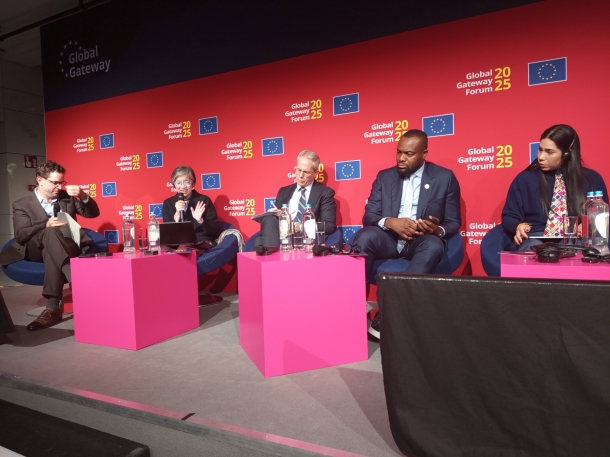
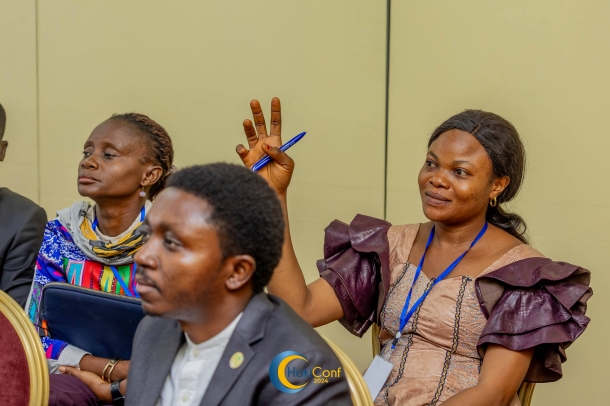
Image credit: APC
We built a shared perspective on community networks and their financing needs. A key area where APC built a common agenda involved better articulating the different kinds of community-centred connectivity initiatives that operate in the Global South, and shifting the understanding of their funding needs. Through research and consistent advocacy, the Local Networks (LocNet) initiative – run in partnership with Rhizomatica – persuaded key organisations to see community networks as enterprises with a social purpose, emphasising that blended financing was the most effective way to secure their sustainability. Among organisations and institutions that have shifted their strategic emphasis on funding community networks are the Global Gateway’s Digital for Development Hub, Smart Africa, the European Centre for Development Policy Management, the Internet Society, Connect Humanity, MCE Conseils and the Atlantic Council. At the World Summit on the Information Society 20-year review (WSIS+20), our advocacy on digital inclusion also helped ensure that the issue was not sidelined at the forum, contributing to the establishment of the UN Group on the Information Society (UNGIS) inter-agency task force on financing. Alongside this work, LocNet collaboratively developed a typology of community-centred connectivity initiatives, as well as principles for operating a community-run initiative. Both have been supported by partners and other stakeholders working on digital inclusion in underserved communities.
We convened activists to shape a collective future for digital justice. APC helped strengthen the digital justice movement working closely with our partner IT for Change and others in the Global Digital Justice Forum (GDJF), a coalition of civil society organisations from the Global Majority. One of the GDJF's main priorities in 2025 was to build a common agenda for the WSIS+20 process. We convened a strategy meeting in February 2025 in Johannesburg with organisations from across fields who participate in the forum, and launched the Digital Justice Now! campaign. Over 100 organisations participated in the campaign, including APC members such as Colnodo, the Institute for Social Entrepreneurship in Asia (ISEA), Rhizomatica, and REDES A.C. At WSIS+20 we worked with the GDJF, the Global Digital Rights Coalition, the Gender in Digital Coalition and other civil society networks to develop common positions, resulting in joint statements, submissions and co-organised events.
Image credit: Rudi International/HakiConf
We opened up pathways for multistakeholder collaboration in regional and national events. With APC subgranting support, in November 2025 APC member Rudi International hosted the sixth edition of HakiConf in the Democratic Republic of the Congo (DRC). Its annual flagship conference on human rights in the digital age attracted nearly 200 participants, including national policy makers and the telecoms regulatory agency in the DRC. This was the first time that national policy makers actively participated in the event, breaking a historic pattern of government disengagement. In September, APC member Collaboration on International ICT Policy for East and Southern Africa (CIPESA) also successfully hosted the annual Forum on Internet Freedom in Africa (FIFAfrica), which took place in Namibia. The forum convened many APC members and partners from the region that see FIFAfrica as an opportunity to nurture alliances that strengthen local struggles for digital justice. In October, APC member Pollicy from Uganda hosted DataFest Africa, an event focused on reclaiming Africa’s digital future, and in which several members and APC partners participated. Meanwhile in August, over 500 activists, policy makers, technologists, feminists, environmental and labour activists, journalists and lawyers participated in the Digital Rights Asia-Pacific Assembly (DRAPAC) in Kuala Lumpur, Malaysia. The hybrid event organised by APC member EngageMedia aimed to strengthen regional solidarity and innovation in advancing digital rights and internet freedom through multistakeholder collaboration, capacity building and identifying shared priorities to combat the region’s most pressing digital rights threats. The event was also an opportunity for our members in India, Indonesia, Myanmar, the Philippines, South Korea and Taiwan to come together in an APC Asia Gathering to discuss the priorities for the region.
We strengthened feminist coordination and research. APC has built on its years of advocacy against technology-facilitated gender-based violence (TFGBV) by strengthening the research and advocacy capacities of Global South practitioners through the Feminist Internet Research Network (FIRN). FIRN and its network of peer support helped 10 partners develop their capacities to challenge dominant discourses on their experiences through their own research, and even to engage local governments to shape policy on TFGBV. Organisations we worked with included O.Tra.S Organización de Trabajadoras Sexuales in Uruguay, the Women's Center Gulrukhsor in Tajikistan, The Hub for Decolonial Feminist Psychologies in Africa in South Africa, Sangath in India, Minas Programam in Brazil, and Kohl in Lebanon and Palestine. A symposium organised by FIRN also demonstrated the power of cross-movement solidarity and collective knowledge building. Meanwhile, through APC subgrant support, women’s human rights organisations in Tanzania formed a permanent national working group that is emerging as a key platform for feminist digital rights coordination. Through support from an APC subgrant, Burmese women human rights defenders (WHRDs) in exile were also formally certified as Community Connectors, establishing a peer-led protection network for displaced defenders and the communities they serve.
We raised awareness of the importance of free/libre and open source software (FLOSS) for digital rights organisations. APC raised awareness of FLOSS funding opportunities and projects in the Global South through the NGI Zero initiative. The initiative fostered greater collaboration among grantees, the FLOSS community in Europe and civil society organisations including APC members. Our member Sursiendo also updated their directory of individuals and collectives working with free software design and launched an interview series called "The People Behind the Technologies We Want".
We supported digital rights networks in Latin America. APC member Sursiendo launched the Observatorio Latinoamericano de Amenazas Digitales in which our members in the region participate. The observatory’s first report focused on digital threats in Latin America. In Ecuador, the organisations that make up LaLibre.net Tecnologías Comunitarias, a 2025 subgrantee, strengthened their work on digital safety, regulatory frameworks and sustainable financing, despite a challenging national context. LaLibre.net consolidated its advocacy concerns through its Second National Gathering of Digital Rights Defenders in Ecuador, which grew from 16 people and eight organisations at the first edition to 28 people and 11 organisations, including women, non-binary persons and people from Afro-Ecuadorian and Amazon communities. After years of partnership, the Mexican organisation REDES A.C. formally joined the APC network. In collaboration with APC and Rhizomatica, the organisation continued to implement several training programmes on digital technologies and community-centred connectivity. These included the International Training Programme for ICT Network Managers in Latin America and the first edition of the programme in Africa, developed jointly with the International Telecommunication Union (ITU).
We strengthened our approach to movement building in the Asia-Pacific region by connecting national movements around digital rights issues with network members and partners in South and Southeast Asia. The approach built on feedback given by grassroots and national-level digital rights groups, and it established a new model for connecting diverse national and regional movements working on digital rights regionally. APC contributed as lead organiser by convening national-level events in five countries in South and Southeast Asia in collaboration with APC members (including EngageMedia, Point of View and Foundation for Media Alternatives) and partners (Digitally Right and the Research Group in Innovation for Social Solidarity and Inclusive Economy in Asia at Chulalangkorn University).
Amplifying rights and justice perspectives in digital tech and rights discourses

APC strengthened the voice of women human rights defenders (WHRDs) in advocacy spaces, and the capacity of feminist communities to define their own experience of technology-facilitated gender-based violence (TFGBV), encouraging them to share their perspectives at key events. We helped campaign for digital rights in Palestine, and promoted a digital justice perspective in global forums. We also raised awareness of community networks and alternative feminist infrastructures, as well as the threat of disinformation, while pushing for an end to internet shutdowns in Myanmar and Tanzania.
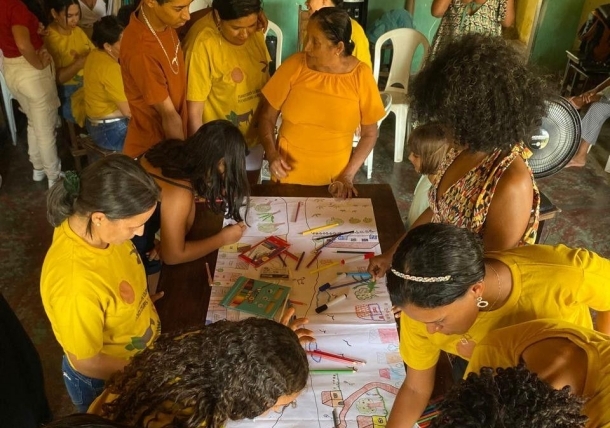
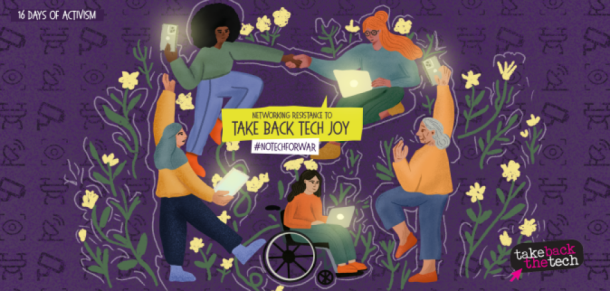
Image credit: Intervozes
We centred the voices of feminists and WHRDs, building their capacity to safely engage in advocacy spaces. Through the work of APC members, the Feminist Internet Research Network (FIRN), and the Safety for Voices and Our Voices, Our Futures consortiums, we built the capacity of feminists and WHRDs to safely articulate their experiences and engage more meaningfully and confidently in advocacy spaces. Safety for Voices research highlighted the silencing of WHRDs through surveillance laws, content moderation policies and internet shutdowns, and revealed how governments and tech companies escape accountability. The consortium, alongside FIRN capacity building and digital safety training, strengthened the resilience of feminist and defender networks in Ecuador, Uruguay, Brazil, Tajikistan, Kenya, Uganda and West Africa. Significant capacity for policy influence was built through a Safety for Voices subgrant to ROFAH, a transnational West African network of women with disabilities. ROFAH used the grant to strengthen their structures and policy influence, reporting increased confidence to speak publicly, greater access to spaces where rights were discussed, and greater visibility of their priorities in national debates. In Uganda, civil society participating in the Our Voices, Our Futures consortium built a collaborative agenda among WHRDs and women's rights and queer movements to defend their communities against the anti-homosexuality bill, address TFGBV and engage internet governance processes. This included working with duty bearers such as the police to break down silos. Boda-boda drivers in Mombasa in Kenya were encouraged to reduce their harassment of LGBTQI+ community members after a workshop that focused on creating awareness and securing commitments from the drivers. This initiative was launched through an Our Voices, Our Futures consortium subgrant in alliance with the Initiative for Equality and Non-Discrimination. Through APC support, women-led organisations in Somalia also worked together to engage their parliament on a long-stalled Sexual Offences Bill. While a Tajikistan women’s domestic violence shelter was able to engage with local authorities to help shape TFGBV policy using their own research after a FIRN capacity building, APC supported the Free Territories, Free Technologies project in Brazil, coordinated by Intervozes. In 2025, the project launched a new phase of in-person activities across dozens of communities in the country, offering them a chance to share their experiences, and focusing on how digital technologies can help defend territorial autonomy while supporting women’s rights and socio-environmental justice.
We amplified alternative discourses on TFGBV in global forums, and strengthened national responses to attacks. By supporting feminist organisations working in countries in the Global South through FIRN, the Our Voices, Our Futures consortium and the #FeministTechJoy subgrants, we built the research capacities of women and LGBTQIA+ communities so that they could challenge dominant discursive framings of TFGBV and articulate their own experiences through their research. Among other actors, sex workers in countries in Latin America and Africa became trainers in digital safety and expanded their advocacy influence to better frame discourse affecting their rights as sex workers. FIRN researchers were also invited to share their findings at the United Nations Population Fund (UNFPA), Feminist AI and other global forums. A GenderIT.org special edition launched in November provided critical insights that emerged from the 10 research projects carried out under FIRN. Meanwhile, through a subgrant, APC member Bangladesh NGOs Network for Radio and Communication (BNNRC) set out to strengthen the ability of women-led civil society organisations to prevent, recognise and respond to TFGBV in their country.
We supported digital rights advocacy in Palestine. As part of the Palestinian Digital Rights Coalition, we supported the #ReconnectGaza campaign calling for the international community, humanitarian agencies and telecommunications regulators to treat the communications blackout in Palestine as an emergency. APC also endorsed a statement urging an end to sanctions on UN Special Rapporteur Francesca Albanese, while demanding big tech accountability for violations in Palestine. APC member 7amleh meanwhile worked intensely to document, amplify and defend against Palestinian digital rights abuses during the war and genocide. The organisation denounced the persistent censorship of Palestinian voices by Meta, exposed biased content moderation practices on LinkedIn, and promoted information on digital security for those at risk. 7amleh also led the ninth edition of the Palestine Digital Activism Forum 2025, held under the theme "Disconnected: The Impact of War on Internet Access and Palestinian Digital Rights", which was attended by over 900 participants from around the world.
We collaboratively raised awareness of the importance of a digital justice perspective. Working with IT for Change, we built a common agenda for the World Summit on the Information Society 20-year review (WSIS+20) with organisations in the Global Digital Justice Forum (GDJF), helping to launch the Digital Justice Now! campaign. The campaign pushed for WSIS+20 and other global digital cooperation processes to adopt a human rights perspective, to see the internet as a global communications commons, to work towards a just international economic order, and to ensure a sustainable and human rights-based digital transition.
We amplified community network success stories to inspire others with alternative strategies to achieve digital inclusion. In May, APC members from Latin America and the Caribbean, Africa and Asia met online to share insights, outcomes and lessons learned from community-centred connectivity initiatives in the Global South, in a convening that was supported by APC’s advocacy and institutional strengthening grants. The local impact of community networks was also featured in 12 stories from communities in the Routing for Communities podcast. The podcast’s second season was inspired by the need to answer key questions such as: What changes when the internet connection is centred in communities?, How are women changing networks, and networks changing women?, and What makes connectivity really meaningful to people? You can find these and all the episodes of the series here.
Image credits: Junaid Rana
We continued to build awareness around gender digital rights and feminist alternative infrastructures. Thirty years after the Beijing Declaration and Platform for Action, a GenderIT.org edition reflected on the legacy of the struggle for gender digital rights. Across diverse contexts, the articles celebrated feminist resilience and called for the reimagining of a gender-just future, asking how feminist movements can shape the future of gender equality in today’s digital age. #FeministTechJoy, a series of annual small grants led by APC and designed to spark the exploration of alternative infrastructures and strategies, also supported several initiatives undertaken by partners celebrating feminist expression and collective support.
We highlighted the impact of disinformation on human rights. APC’s The Full Picture digital campaign shared insights on the impact of disinformation on human rights for journalists and communications professionals using Facebook, Instagram and LinkedIn to reach them effectively. A joint endeavour between APC and the digital media social enterprise Chambal Media also explored the realities of gendered disinformation in rural India, shining a spotlight on the experiences of women and gender-diverse persons in the country.
We campaigned for an end to internet shutdowns. Following Myanmar’s catastrophic 7.7 magnitude earthquake in March, a coalition of rights groups, including many from the APC community, issued a statement demanding an immediate end to military-imposed internet restrictions. Meanwhile, a statement released by Zaina Foundation, in collaboration with APC and the Tanzania Digital Rights Coalition, criticised the blocking of the X platform in Tanzania, saying it was not a technical issue but a deliberate act of interference. The Spanish language version of the Internet Shutdown Game was also launched. The game is a tool for raising awareness about the different tactics used to restrict internet access, as well as improving participants' understanding of internet infrastructure, blocking procedures and the alternatives available to circumvent them.
Collectively shaping digital standards, policies, processes, norms

2025 was a key year for APC, its members and partners in the field of internet governance. A substantive impact was our contribution to securing a permanent mandate for the Internet Governance Forum (IGF) through our sustained advocacy at the World Summit on the Information Society 20-year review (WSIS+20) process. We also refocused the discussions on financing last-mile connectivity through our advocacy on community-centred connectivity initiatives, and strengthened human rights language in global processes. We foregrounded the realities of women human rights defenders in policy spaces, and pushed for gender perspectives to be emphasised in global and regional forums as well as in national legislation, expanding discourse on digital violence. As we have done in previous years, we deepened stakeholders’ understanding of emerging policy terrains.
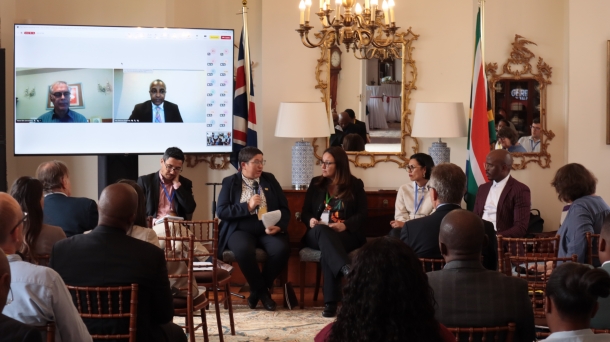
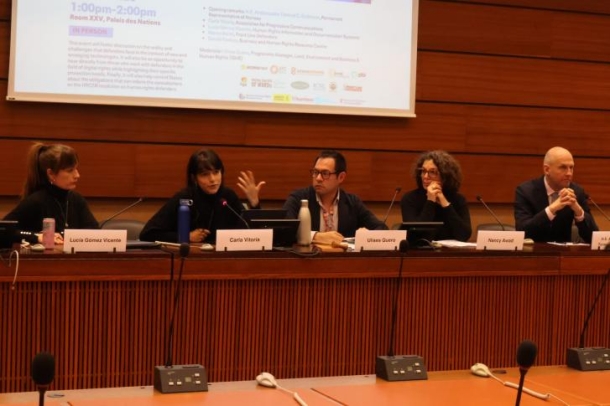
We strengthened multistakeholder internet governance processes, securing positions of influence for civil society. 2025 marked the 20th anniversary of WSIS, a global process that has been foundational to the multistakeholder approach to internet governance. APC's advocacy strategy for the WSIS+20 review began in the second half of 2023 and reached a significant milestone in December 2025 at the UN Headquarters in New York with the adoption by consensus of the WSIS+20 Outcome Document. This secured the continuation of the WSIS process, aligning it with the Global Digital Compact and laying the groundwork for better coherence across the UN's digital agenda. Another key result of this process was the IGF being granted a permanent mandate and recognised as a vital multistakeholder space for digital governance discussions. This was the result of coordinated efforts by APC and other civil society organisations who pushed for recognition of the role that civil society organisations play in internet governance. The WSIS+20 Informal Multistakeholder Sounding Board (IMSB) also selected APC's global governance advocacy lead manager, Valeria Betancourt, to be part of the first experiment to implement the multistakeholder model in UN intergovernmental processes, enabling APC to influence the IMSB's scope and role. Meanwhile, the Multistakeholder Advisory Group (MAG) of the IGF selected Betancourt and APC senior advisor on global and regional internet governance Anriette Esterhuysen to join its special 2025 convening, enabling APC to help shape the IGF agenda and connect it to the WSIS+20 review process.
Image credit: Mar Amador Caravantes
We centred the discussion on financing digital connectivity in the Global South. A priority at the WSIS+20 review was to push forward a dedicated focus on financing in order to ensure that the implementation of the WSIS goals would be feasible. As a result of APC’s consistent advocacy, the UN Group on the Information Society (UNGIS), which is the inter-agency mechanism coordinating WSIS implementation, established a financing task force and a Multistakeholder Consultation Group to work on frameworks for financing digital development as outcomes of the WSIS+20 review. Complementing our work through the Local Networks (LocNet) initiative on sustainable blended financing solutions for community-centred connectivity initiatives, APC co-authored the official report of the UN IGF Dynamic Coalition on Community Connectivity focused on sustainable financing solutions for community connectivity. The report was launched in a session at the IGF in Oslo in June. This milestone was followed in October by the T20 summit side event “Breaking barriers: Innovative financing for community-centred digital inclusion” in South Africa, convened by the UK High Commission, UNESCO and APC. The side event gathered around 100 stakeholders who discussed ways of achieving sustainable funding for community networks. We have also seen a shift in approaches in financing digital inclusion among bilateral donors, such as the Dutch Ministry of Foreign Affairs.
Image credit: International Service for Human Rights (ISHR)
We strengthened digital and human rights language in global processes, outcomes and resolutions. Through advocacy at the WSIS+20 review by APC and its partners, its Outcome Document incorporated strong language on digital inequalities, community-centred connectivity, and human rights, including gender equality. We also positively influenced the language in a new resolution on human rights defenders and new technologies adopted by the UN Human Rights Council in March, strengthening its language on gender rights. Meanwhile country delegations, civil society and the private sector within the Freedom Online Coalition (FOC) consistently mainstreamed human rights, gender and social justice issues within the FOC Advisory Network and in the policy discussions and outputs of the FOC’s 41 member states. APC, as part of the Advisory Network, led proactive advice, convened meetings, participated in FOC events and panels, briefed delegations ahead of key governance processes, and provided evidence on situations of human rights online in Global South countries. APC’s engagement with pressing issues and international processes led to issuing or endorsing 38 statements and submissions in 2025. These covered topics such as AI, the right to privacy and the impact of disinformation on human rights.
Image credit: ISEA
We catalysed policy change to support community networks across regions and in our focus countries. Through APC and LocNet advocacy, as well as the work of several APC members and partners including Colnodo, REDES A.C., ISEA, CITAD, Common Room and Zenzeleni, regional and national regulatory bodies have integrated community-led connectivity initiatives into their digital inclusion policies, strategies and discussions. The International Telecommunication Union (ITU) Americas Regional Office formally recognised a community-led initiative as a regional model, showcasing the ICT Network Bootcamp (organised by Rhizomatica, REDES A.C. and APC) as an impact story in its official publication “State of digital development and trends in the Americas”. The member states of the UN Commission on Science and Technology for Development also adopted new language formally recognising “participative and community-centered connectivity models” in an official resolution. The proposal was introduced by Tanzania, supported by South Africa and Egypt, and accepted by all states. Alongside these achievements, following years of engagement we were asked to develop regional guidelines for community broadband networks by the Communications Regulatory Authority of Southern Africa (these were later adopted by Southern African Development Community member states). Meanwhile, the countries where the LocNet initiative focused its advocacy efforts in 2025 achieved various concrete results. Policy-making milestones were celebrated with the public launch of national strategies to advance community networks in South Africa and Kenya, and the approval of a groundbreaking law in support of connecting underserved communities in the Philippines. In Kenya, community-centred connectivity initiatives shifted from operating informally to formally engaging with regulators, resulting in 13 licence applications and four successful licences. In Colombia, the Ministry of ICT adopted Resolution 1701 of 2026, which regulates the assignment of the 900 MHz band to organised connectivity communities. Meanwhile, following years of persistent engagement, APC together with our member CITAD co-designed a sensitisation workshop for the Nigerian Communications Commission, and established a working group to finalise a community network licensing framework for the country.
We pushed for gender perspectives in global and regional forums, expanding discourse on digital violence. Key forums and processes focused on digital rights, such as the Global Digital Compact process and WSIS+20, included gender-rights language in their outcome documents as a result of APC working with coalitions such as the Gender and Digital Coalition and the Global Digital Justice Forum. While the Freedom Online Coalition mainstreamed gender in its deliberations, and APC strengthened the gender language in the UN Human Rights Council resolution on human rights defenders, through our work on technology-facilitated gender-based violence (TFGBV) the need to prevent and respond to digital violence was taken on board by decision-making bodies addressing gender-based violence more broadly. An important impact was APC’s contribution to the Organization of American States’ MESECVI Inter-American Model Law on Gender-Based Digital Violence against Women, expanding the TFGBV discourse beyond social media to include militarisation, war and genocide. This was the result of work by Safety for Voices consortium member IM-Defensoras, which presented analyses drawn from over a decade of research at an expert meeting, encouraging state and institutional actors to take necessary action. In 2025, the IM-Defensoras registry of attacks on Mesoamerican women human rights defenders (WHRDs) recorded 6,839 attacks against 581 individual women defenders and 70 organisations across Mexico, El Salvador, Honduras and Nicaragua.
We built the visibility of WHRDs in policy spaces. APC and partners working in the Safety for Voices consortium continued to strengthen the voice and visibility of WHRDs in policy spaces, influenced international and regional advocacy agendas, and promoted systemic changes rooted in feminist holistic protection. This was done through engagement in UN processes such as the Universal Periodic Review (UPR), the UN Human Rights Council and WSIS+20. APC co-authored four UPR stakeholder reports, three with members – TEDIC and Derechos Digitales (for Paraguay), CIPESA (for Rwanda) and SMEX (for Lebanon) – as well as a report for Namibia which we authored independently. A report on digital repression in Myanmar, produced by the Myanmar Internet Project in collaboration with APC, was originally intended as a UPR submission but was published as a separate output.
We also built stakeholder capacity on gender and cybersecurity. We strengthened the capacity and awareness of the importance of gender in cybersecurity of stakeholders engaged in international cybersecurity governance processes. These included policy makers, civil society and academics, as well as institutions such as the Organization of American States and the Organization for Security and Co-operation in Europe, and mechanisms such as the UN’s Open-Ended Working Group on security of and in the use of ICTs. APC also developed a framework for integrating gender into the interpretation and implementation of the 11 UN norms for responsible state behaviour in cyberspace.
Image credit: Hugo Domingo
We deepened stakeholders’ understanding of emerging policy terrains. In May, participants in the 13th edition of the African School on Internet Governance (AfriSIG) held in Dar es Salaam, Tanzania, increased their knowledge of internet and digital policy, sharpened negotiation skills, and deepened their understanding of a multistakeholder, human rights-based approach to internet governance. There were 55 participants from diverse stakeholder groups – members of parliament, regulators, the private sector, academia, media and civil society from across Africa. The event was co-organised by APC, the African Union Commission and Research ICT Africa, in collaboration with the United Nations Economic Commission for Africa and the UN Internet Governance Forum Parliamentary Track. In July, the first edition of the School on Platform Governance in Asia, organised by Open Net Korea and APC, was held in Thailand. It was a unique capacity-building opportunity for young lawyers, researchers, policy workers and civil society actors who furthered their understanding and analysis of policy frameworks related to platform governance in Asia and explored strategies to hold platforms accountable.
Building collective capacity for safety, care, resilience

In 2025, the collective work of the APC network resulted in feminists, women human rights defenders and civil society organisations being equipped with digital safety skills, as well as toolkits, processes and procedures developed to address online violence and their care needs. We continued to build the resilience of community-centred connectivity initiatives and to push for organisations in the Global South to work with free/libre and open source software (FLOSS) as a secure technology alternative.

We built the holistic security of feminists and women human rights defenders (WHRDs) across regions in the Global South. Defenders, organisations and networks developed new services oriented towards resilience, security and care, including Burmese WHRDs in exile, who became peer-led protectors for holistic security, and APC member Point of View, which strengthened the capacity of its helpline responders, leading to more effective support for digital violence survivors. As part of the Safety for Voices initiative, APC and its partners IM-Defensoras and Urgent Action Fund worked with WHRDs in 42 countries across the Global South to build their security capacity and develop rapid response support to confront digital violations of defenders. A significant focus in 2025 was deepening collaboration between IM-Defensoras and digital protection teams to strengthen the documentation of the psychosocial impacts of digital attacks – a core element of the feminist holistic protection strategy – in its registry of attacks on Mesoamerican WHRDs. The queer movement in Bangladesh meanwhile built its capacity in digital security and digital rights trainings through local Feminist Tech eXchanges and introduced digital safety skills building and digital rights and governance discourse into its work. These results were made possible through a multi-year partnership with APC’s Our Voices, Our Futures consortium.
We supported the development and sharing of security toolkits in Latin America and Asia. Across projects, we supported the creation and exchange of tools for holistic security among organisations and activists. In Latin America, TEDIC shared its integrated SAFETAG-plus-emotional-security methodology with other civil society organisations; Media Matters for Democracy in Pakistan developed a digital security methodology for transgender people in their region; and the regional and country teams of the UN Refugee Agency in South and Southeast Asia now use a toolkit for monitoring hate speech and disinformation targeting refugee populations.
Image credit: Common Room
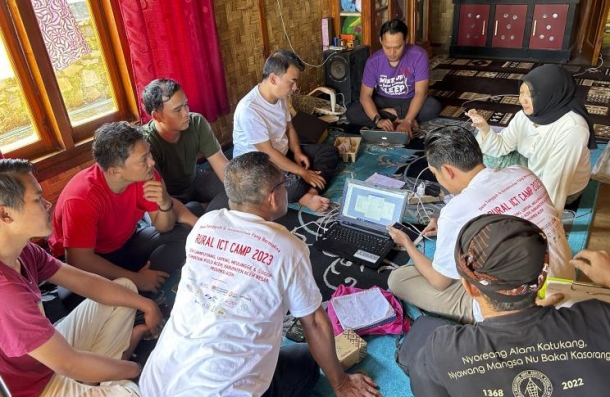
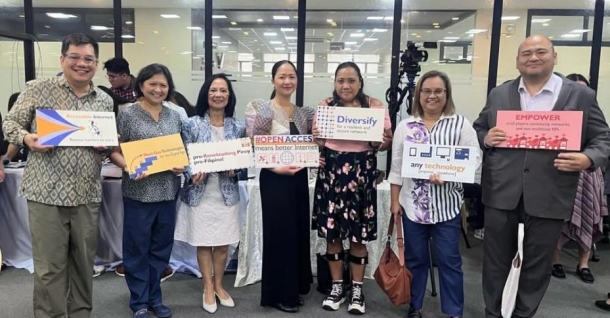
We developed the capacity of communities to run community networks. Across regions, APC worked with its partners to build the capacity to run community-centred connectivity networks sustainably and in a way that benefits the rights of communities and their territories. New editions of the Blended Training for ICT Network Managers in Indigenous and Rural Communities were launched in Latin America and Africa. Organised by the International Telecommunication Union (ITU), Rhizomatica, and regional partners the African Advanced Level Telecommunications Institute (AFRALTI) and REDES A.C., and supported by the Local Networks (LocNet) initiative, the programmes strengthened local capacity to build and manage community networks. The Africa edition convened 44 participants from 18 countries, while the edition in Latin America gathered 85 participants, involving community communicators from 14 countries. Meanwhile, the Foundation for Media Alternatives emphasised the importance of integrating digital safety into community connectivity efforts during the Philippine Community-Centred Connectivity Initiatives Bootcamp, held in November. The three-day bootcamp convened community network builders, social enterprise leaders and digital rights advocates to strengthen inclusive and community-driven approaches to connectivity. In Indonesia, APC member Common Room supported multiple community networks in their country. This article features the different ways they are connecting underserved communities, while building the local capacity of men and women. Participants in the 2025 community-centred connectivity initiatives bootcamp organised by APC in Brazil also developed capacities to work together as a gender collective within the Brazilian community network movement. Lastly, the LocNet initiative supported a growing community of practice focused on the development of solar-powered sensors for agricultural, environmental and territorial monitoring.
We encouraged organisations to work with FLOSS. Across projects, we promoted FLOSS as a sustainable software choice, raising awareness of FLOSS projects and funding opportunities in the Global South. A key success story was Astraea's technical labs for human rights defenders developing its open source infrastructure with APC’s support. We also created the "Building a Free Internet of the Future" series of articles together with our NGI Zero partners to promote FLOSS and sustainable computing. During 2025, the series featured 10 conversations with representatives of projects supported by NGI Zero grants. It highlighted alternatives to YouTube, free software to support self-organising in local communities, and how to extend the life of consumer electronics. Meanwhile, through subgrant support, our member Open Culture Foundation collated open source safety tools to support human rights defenders in Taiwan.
Shared resources and capacity to learn, grow and thrive

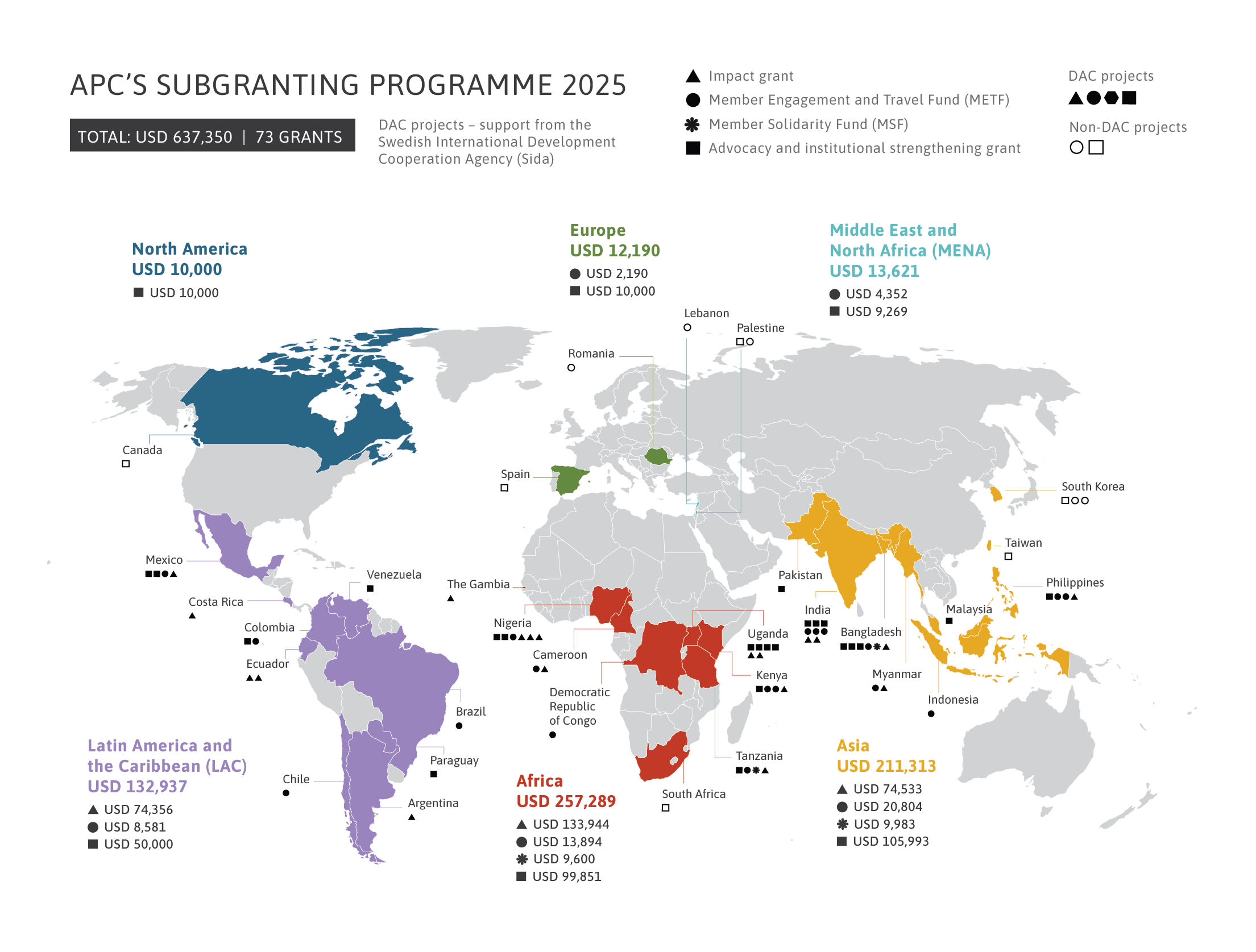
Across the network, APC's subgranting strategy demonstrated how resources can build capacity, foster regulatory change, strengthen collective action, and support communities to defend their rights and territories. APC's subgranting programme creates chains of change from resources to capacity building, from capacity to engagement, and from engagement to institutionalisation, supporting technical and policy outcomes, as well as movement building across fields. In 2025, over USD 1.5 million was distributed through 206 subgrants in 48 countries, 45 of them in the Global South. Alongside our subgrants, our APC Member Engagement and Travel Fund also helped members engage and participate in strategic events and spaces. During 2025 these included RightsCon, the Internet Governance Forum (IGF), the Commission on the Status of Women, World Summit on the Information Society (WSIS)-related events, the Forum on Internet Freedom in Africa (FIFAfrica) and regional capacity-building workshops.

Amongst other impacts, through subgrant support:

We built the capacity of community-centred connectivity initiatives across regions. In Kenya, Tanda CBO used a subgrant to train and mentor 11 community organisations. This resulted in 13 licence applications and four successful licences. Individuals trained through the programme went on to take key leadership positions within the newly formed Association of Community Networks in Kenya. Also in Kenya, we helped the Arid Lands Information Network (ALIN) connect 200 more members of the community to its second community network set up in the country. Meanwhile, in South Africa, Zenzeleni Networks conducted an audit of six community networks, resulting in them collectively registering as a public benefit organisation and strengthening their sustainability. In Colombia, our member Colnodo worked with community networks to co-design environmental monitoring kits. Communities used these kits to collect local data on deforestation, agricultural burning, and air and water quality, demonstrating how connectivity can serve environmental stewardship. We also ran a community network bootcamp in the Philippines through the Institute for Social Entrepreneurship in Asia and Philippine Rural Reconstruction Movement with support from the Internet Society, which brought together 25 participants over three days to share their experiences, map structural barriers, co-learn technical skills and initiate action plans grounded in local knowledge. We also supported the work of rural community case managers in Nigeria through our member Fantsuam Foundation. The case managers live in the communities they support and are trained to act as first responders and first aid providers to residents.
We strengthened the response to technology-facilitated gender-based violence (TFGBV) in Asia and supported strategic planning on digital rights and feminist organising in Uganda. In Bangladesh, we tackled the threat of TFGBV through a project run by our member Bangladesh NGOs Network for Radio and Communication. The project aimed to support approximately 30 university teachers from 15 universities and 50 other stakeholders in an effort to establish stronger frameworks for preventing and responding to gender-based digital violence. In India, we supported APC member Point of View in an initiative that aimed to strengthen the responses available to women, including young women from low-income communities, sex workers, LGBTQ+ persons and persons with disabilities, when they face image-based abuse. We also supported the organisational strategic planning of our member Pollicy in Uganda. This involved a three-day staff retreat to allow the organisation to navigate a leadership transition while responding to complex global and regional challenges affecting digital rights and feminist organising.
We helped journalists and community media, as well as human rights defenders, in Latin America and Asia. We provided emergency support to our member Media Matters for Democracy to sustain its Digital Rights Monitor during a period of severe financial strain; it remains Pakistan’s only digital rights journalistic platform. In Mexico, REDES A.C. created a forum for Indigenous media outlets and civil society to build a shared agenda that allowed the development of an enabling regulatory environment in the country. We also supported journalists and human rights defenders in Bangladesh and Taiwan. We increased their online safety in Bangladesh through supporting a capacity-building initiative aimed at strengthening the digital resilience of both national and grassroots-level actors, developed by our member Voices for Interactive Choice and Empowerment (VOICE). Meanwhile, our member Open Culture Foundation raised awareness about open source digital safety tools for human rights defenders in Taiwan.
We supported advocacy for privacy rights and a campaign against internet shutdowns during elections in Uganda and Tanzania. In Uganda, Unwanted Witness worked to ensure that digital technologies used in elections respected the right to privacy, while in Tanzania, our member Zaina Foundation campaigned against internet shutdowns during their general elections in October.
Our members also launched digital training initiatives, building capacity among the youth and the judiciary, as well as in entrepreneurship and innovation in underserved communities. In Colombia, Colnodo trained 150 students from schools in Bogota in digital safety through its Digital Safety School, while a Digital Security School run by eQualitie and DreamSpace Academy was supported in Sri Lanka. The school is dedicated to empowering underserved communities through education, innovation and entrepreneurship, and also provides digital security services to journalists, media organisations, activists and human rights defenders across the country. In Nigeria, the Centre for Information Technology and Development (CITAD) worked with its eRights partners and trained junior judges and lawyers at municipal level to strengthen the judicial response to digital rights violations in the country. Meanwhile, in Venezuela, APC member EsLaRed received support to build an online digital repository of training resources.
We strengthened civil society’s knowledge of artificial intelligence (AI) and its implications for policy, legislation, gender and advocacy. With APC support, the Digital Justice Network launched their report “Research on AI Policy and Issues in Key Areas in South Korea: Public Sector, Law Enforcement, Education and Social Welfare”, which analyses the standards for AI regulation, implementation status, and actual or potential problems in key areas including public administration, law enforcement, education and social welfare. The Digital Justice Network also launched the “Generative AI Guide for Civil Society” that originated from the realisation that civil society organisations and activists need help in establishing generative AI policies and properly using these tools. Meanwhile, the Centre for Multilateral Affairs released the report “Examining the Governance Frameworks and Gender Dimensions of Artificial Intelligence Policy in Uganda", as well as the policy brief “Advancing Inclusive and Contextually Relevant AI Policies in Uganda", which offers recommendations such as ensuring equitable representation of women and marginalised groups in AI policy-making bodies.
We funded environmental justice and sustainable computing through our members working in Spain and South Africa. Long-term member Pangea used a small grant to strengthen its eReuse initiative, and to explore building common agendas on digital technologies and environmental justice in the APC community. Meanwhile, Computer Aid International built its staff and marketing capacity in South Africa to increase its distribution of second-hand devices in the country.
We helped raise awareness of technology and mental health issues in Paraguay. Mente en Línea-Plus is an initiative from APC member TEDIC aimed at updating and expanding educational materials on mental health and technology. In collaboration with PsicoFEM and the Paraguayan Association of Psychiatry, their project raised awareness of data detox, techno-stress and screen time, as well as children's privacy and the impact of digital exposure on their mental health.
Image credit: APC
We built a shared perspective on community networks and their financing needs. A key area where APC built a common agenda involved better articulating the different kinds of community-centred connectivity initiatives that operate in the Global South, and shifting the understanding of their funding needs. Through research and consistent advocacy, the Local Networks (LocNet) initiative – run in partnership with Rhizomatica – persuaded key organisations to see community networks as enterprises with a social purpose, emphasising that blended financing was the most effective way to secure their sustainability. Among organisations and institutions that have shifted their strategic emphasis on funding community networks are the Global Gateway’s Digital for Development Hub, Smart Africa, the European Centre for Development Policy Management, the Internet Society, Connect Humanity, MCE Conseils and the Atlantic Council. At the World Summit on the Information Society 20-year review (WSIS+20), our advocacy on digital inclusion also helped ensure that the issue was not sidelined at the forum, contributing to the establishment of the UN Group on the Information Society (UNGIS) inter-agency task force on financing. Alongside this work, LocNet collaboratively developed a typology of community-centred connectivity initiatives, as well as principles for operating a community-run initiative. Both have been supported by partners and other stakeholders working on digital inclusion in underserved communities.
We convened activists to shape a collective future for digital justice. APC helped strengthen the digital justice movement working closely with our partner IT for Change and others in the Global Digital Justice Forum (GDJF), a coalition of civil society organisations from the Global Majority. One of the GDJF's main priorities in 2025 was to build a common agenda for the WSIS+20 process. We convened a strategy meeting in February 2025 in Johannesburg with organisations from across fields who participate in the forum, and launched the Digital Justice Now! campaign. Over 100 organisations participated in the campaign, including APC members such as Colnodo, the Institute for Social Entrepreneurship in Asia (ISEA), Rhizomatica, and REDES A.C. At WSIS+20 we worked with the GDJF, the Global Digital Rights Coalition, the Gender in Digital Coalition and other civil society networks to develop common positions, resulting in joint statements, submissions and co-organised events.
Image credit: Rudi International/HakiConf
We opened up pathways for multistakeholder collaboration in regional and national events. With APC subgranting support, in November 2025 APC member Rudi International hosted the sixth edition of HakiConf in the Democratic Republic of the Congo (DRC). Its annual flagship conference on human rights in the digital age attracted nearly 200 participants, including national policy makers and the telecoms regulatory agency in the DRC. This was the first time that national policy makers actively participated in the event, breaking a historic pattern of government disengagement. In September, APC member Collaboration on International ICT Policy for East and Southern Africa (CIPESA) also successfully hosted the annual Forum on Internet Freedom in Africa (FIFAfrica), which took place in Namibia. The forum convened many APC members and partners from the region that see FIFAfrica as an opportunity to nurture alliances that strengthen local struggles for digital justice. In October, APC member Pollicy from Uganda hosted DataFest Africa, an event focused on reclaiming Africa’s digital future, and in which several members and APC partners participated. Meanwhile in August, over 500 activists, policy makers, technologists, feminists, environmental and labour activists, journalists and lawyers participated in the Digital Rights Asia-Pacific Assembly (DRAPAC) in Kuala Lumpur, Malaysia. The hybrid event organised by APC member EngageMedia aimed to strengthen regional solidarity and innovation in advancing digital rights and internet freedom through multistakeholder collaboration, capacity building and identifying shared priorities to combat the region’s most pressing digital rights threats. The event was also an opportunity for our members in India, Indonesia, Myanmar, the Philippines, South Korea and Taiwan to come together in an APC Asia Gathering to discuss the priorities for the region.
We strengthened feminist coordination and research. APC has built on its years of advocacy against technology-facilitated gender-based violence (TFGBV) by strengthening the research and advocacy capacities of Global South practitioners through the Feminist Internet Research Network (FIRN). FIRN and its network of peer support helped 10 partners develop their capacities to challenge dominant discourses on their experiences through their own research, and even to engage local governments to shape policy on TFGBV. Organisations we worked with included O.Tra.S Organización de Trabajadoras Sexuales in Uruguay, the Women's Center Gulrukhsor in Tajikistan, The Hub for Decolonial Feminist Psychologies in Africa in South Africa, Sangath in India, Minas Programam in Brazil, and Kohl in Lebanon and Palestine. A symposium organised by FIRN also demonstrated the power of cross-movement solidarity and collective knowledge building. Meanwhile, through APC subgrant support, women’s human rights organisations in Tanzania formed a permanent national working group that is emerging as a key platform for feminist digital rights coordination. Through support from an APC subgrant, Burmese women human rights defenders (WHRDs) in exile were also formally certified as Community Connectors, establishing a peer-led protection network for displaced defenders and the communities they serve.
We raised awareness of the importance of free/libre and open source software (FLOSS) for digital rights organisations. APC raised awareness of FLOSS funding opportunities and projects in the Global South through the NGI Zero initiative. The initiative fostered greater collaboration among grantees, the FLOSS community in Europe and civil society organisations including APC members. Our member Sursiendo also updated their directory of individuals and collectives working with free software design and launched an interview series called "The People Behind the Technologies We Want".
We supported digital rights networks in Latin America. APC member Sursiendo launched the Observatorio Latinoamericano de Amenazas Digitales in which our members in the region participate. The observatory’s first report focused on digital threats in Latin America. In Ecuador, the organisations that make up LaLibre.net Tecnologías Comunitarias, a 2025 subgrantee, strengthened their work on digital safety, regulatory frameworks and sustainable financing, despite a challenging national context. LaLibre.net consolidated its advocacy concerns through its Second National Gathering of Digital Rights Defenders in Ecuador, which grew from 16 people and eight organisations at the first edition to 28 people and 11 organisations, including women, non-binary persons and people from Afro-Ecuadorian and Amazon communities. After years of partnership, the Mexican organisation REDES A.C. formally joined the APC network. In collaboration with APC and Rhizomatica, the organisation continued to implement several training programmes on digital technologies and community-centred connectivity. These included the International Training Programme for ICT Network Managers in Latin America and the first edition of the programme in Africa, developed jointly with the International Telecommunication Union (ITU).
We strengthened our approach to movement building in the Asia-Pacific region by connecting national movements around digital rights issues with network members and partners in South and Southeast Asia. The approach built on feedback given by grassroots and national-level digital rights groups, and it established a new model for connecting diverse national and regional movements working on digital rights regionally. APC contributed as lead organiser by convening national-level events in five countries in South and Southeast Asia in collaboration with APC members (including EngageMedia, Point of View and Foundation for Media Alternatives) and partners (Digitally Right and the Research Group in Innovation for Social Solidarity and Inclusive Economy in Asia at Chulalangkorn University).
Image credit: Intervozes
We centred the voices of feminists and WHRDs, building their capacity to safely engage in advocacy spaces. Through the work of APC members, the Feminist Internet Research Network (FIRN), and the Safety for Voices and Our Voices, Our Futures consortiums, we built the capacity of feminists and WHRDs to safely articulate their experiences and engage more meaningfully and confidently in advocacy spaces. Safety for Voices research highlighted the silencing of WHRDs through surveillance laws, content moderation policies and internet shutdowns, and revealed how governments and tech companies escape accountability. The consortium, alongside FIRN capacity building and digital safety training, strengthened the resilience of feminist and defender networks in Ecuador, Uruguay, Brazil, Tajikistan, Kenya, Uganda and West Africa. Significant capacity for policy influence was built through a Safety for Voices subgrant to ROFAH, a transnational West African network of women with disabilities. ROFAH used the grant to strengthen their structures and policy influence, reporting increased confidence to speak publicly, greater access to spaces where rights were discussed, and greater visibility of their priorities in national debates. In Uganda, civil society participating in the Our Voices, Our Futures consortium built a collaborative agenda among WHRDs and women's rights and queer movements to defend their communities against the anti-homosexuality bill, address TFGBV and engage internet governance processes. This included working with duty bearers such as the police to break down silos. Boda-boda drivers in Mombasa in Kenya were encouraged to reduce their harassment of LGBTQI+ community members after a workshop that focused on creating awareness and securing commitments from the drivers. This initiative was launched through an Our Voices, Our Futures consortium subgrant in alliance with the Initiative for Equality and Non-Discrimination. Through APC support, women-led organisations in Somalia also worked together to engage their parliament on a long-stalled Sexual Offences Bill. While a Tajikistan women’s domestic violence shelter was able to engage with local authorities to help shape TFGBV policy using their own research after a FIRN capacity building, APC supported the Free Territories, Free Technologies project in Brazil, coordinated by Intervozes. In 2025, the project launched a new phase of in-person activities across dozens of communities in the country, offering them a chance to share their experiences, and focusing on how digital technologies can help defend territorial autonomy while supporting women’s rights and socio-environmental justice.
We amplified alternative discourses on TFGBV in global forums, and strengthened national responses to attacks. By supporting feminist organisations working in countries in the Global South through FIRN, the Our Voices, Our Futures consortium and the #FeministTechJoy subgrants, we built the research capacities of women and LGBTQIA+ communities so that they could challenge dominant discursive framings of TFGBV and articulate their own experiences through their research. Among other actors, sex workers in countries in Latin America and Africa became trainers in digital safety and expanded their advocacy influence to better frame discourse affecting their rights as sex workers. FIRN researchers were also invited to share their findings at the United Nations Population Fund (UNFPA), Feminist AI and other global forums. A GenderIT.org special edition launched in November provided critical insights that emerged from the 10 research projects carried out under FIRN. Meanwhile, through a subgrant, APC member Bangladesh NGOs Network for Radio and Communication (BNNRC) set out to strengthen the ability of women-led civil society organisations to prevent, recognise and respond to TFGBV in their country.
We supported digital rights advocacy in Palestine. As part of the Palestinian Digital Rights Coalition, we supported the #ReconnectGaza campaign calling for the international community, humanitarian agencies and telecommunications regulators to treat the communications blackout in Palestine as an emergency. APC also endorsed a statement urging an end to sanctions on UN Special Rapporteur Francesca Albanese, while demanding big tech accountability for violations in Palestine. APC member 7amleh meanwhile worked intensely to document, amplify and defend against Palestinian digital rights abuses during the war and genocide. The organisation denounced the persistent censorship of Palestinian voices by Meta, exposed biased content moderation practices on LinkedIn, and promoted information on digital security for those at risk. 7amleh also led the ninth edition of the Palestine Digital Activism Forum 2025, held under the theme "Disconnected: The Impact of War on Internet Access and Palestinian Digital Rights", which was attended by over 900 participants from around the world.
We collaboratively raised awareness of the importance of a digital justice perspective. Working with IT for Change, we built a common agenda for the World Summit on the Information Society 20-year review (WSIS+20) with organisations in the Global Digital Justice Forum (GDJF), helping to launch the Digital Justice Now! campaign. The campaign pushed for WSIS+20 and other global digital cooperation processes to adopt a human rights perspective, to see the internet as a global communications commons, to work towards a just international economic order, and to ensure a sustainable and human rights-based digital transition.
We amplified community network success stories to inspire others with alternative strategies to achieve digital inclusion. In May, APC members from Latin America and the Caribbean, Africa and Asia met online to share insights, outcomes and lessons learned from community-centred connectivity initiatives in the Global South, in a convening that was supported by APC’s advocacy and institutional strengthening grants. The local impact of community networks was also featured in 12 stories from communities in the Routing for Communities podcast. The podcast’s second season was inspired by the need to answer key questions such as: What changes when the internet connection is centred in communities?, How are women changing networks, and networks changing women?, and What makes connectivity really meaningful to people? You can find these and all the episodes of the series here.
Image credits: Junaid Rana
We continued to build awareness around gender digital rights and feminist alternative infrastructures. Thirty years after the Beijing Declaration and Platform for Action, a GenderIT.org edition reflected on the legacy of the struggle for gender digital rights. Across diverse contexts, the articles celebrated feminist resilience and called for the reimagining of a gender-just future, asking how feminist movements can shape the future of gender equality in today’s digital age. #FeministTechJoy, a series of annual small grants led by APC and designed to spark the exploration of alternative infrastructures and strategies, also supported several initiatives undertaken by partners celebrating feminist expression and collective support.
We highlighted the impact of disinformation on human rights. APC’s The Full Picture digital campaign shared insights on the impact of disinformation on human rights for journalists and communications professionals using Facebook, Instagram and LinkedIn to reach them effectively. A joint endeavour between APC and the digital media social enterprise Chambal Media also explored the realities of gendered disinformation in rural India, shining a spotlight on the experiences of women and gender-diverse persons in the country.
We campaigned for an end to internet shutdowns. Following Myanmar’s catastrophic 7.7 magnitude earthquake in March, a coalition of rights groups, including many from the APC community, issued a statement demanding an immediate end to military-imposed internet restrictions. Meanwhile, a statement released by Zaina Foundation, in collaboration with APC and the Tanzania Digital Rights Coalition, criticised the blocking of the X platform in Tanzania, saying it was not a technical issue but a deliberate act of interference. The Spanish language version of the Internet Shutdown Game was also launched. The game is a tool for raising awareness about the different tactics used to restrict internet access, as well as improving participants' understanding of internet infrastructure, blocking procedures and the alternatives available to circumvent them.
We strengthened multistakeholder internet governance processes, securing positions of influence for civil society. 2025 marked the 20th anniversary of WSIS, a global process that has been foundational to the multistakeholder approach to internet governance. APC's advocacy strategy for the WSIS+20 review began in the second half of 2023 and reached a significant milestone in December 2025 at the UN Headquarters in New York with the adoption by consensus of the WSIS+20 Outcome Document. This secured the continuation of the WSIS process, aligning it with the Global Digital Compact and laying the groundwork for better coherence across the UN's digital agenda. Another key result of this process was the IGF being granted a permanent mandate and recognised as a vital multistakeholder space for digital governance discussions. This was the result of coordinated efforts by APC and other civil society organisations who pushed for recognition of the role that civil society organisations play in internet governance. The WSIS+20 Informal Multistakeholder Sounding Board (IMSB) also selected APC's global governance advocacy lead manager, Valeria Betancourt, to be part of the first experiment to implement the multistakeholder model in UN intergovernmental processes, enabling APC to influence the IMSB's scope and role. Meanwhile, the Multistakeholder Advisory Group (MAG) of the IGF selected Betancourt and APC senior advisor on global and regional internet governance Anriette Esterhuysen to join its special 2025 convening, enabling APC to help shape the IGF agenda and connect it to the WSIS+20 review process.
Image credit: Mar Amador Caravantes
We centred the discussion on financing digital connectivity in the Global South. A priority at the WSIS+20 review was to push forward a dedicated focus on financing in order to ensure that the implementation of the WSIS goals would be feasible. As a result of APC’s consistent advocacy, the UN Group on the Information Society (UNGIS), which is the inter-agency mechanism coordinating WSIS implementation, established a financing task force and a Multistakeholder Consultation Group to work on frameworks for financing digital development as outcomes of the WSIS+20 review. Complementing our work through the Local Networks (LocNet) initiative on sustainable blended financing solutions for community-centred connectivity initiatives, APC co-authored the official report of the UN IGF Dynamic Coalition on Community Connectivity focused on sustainable financing solutions for community connectivity. The report was launched in a session at the IGF in Oslo in June. This milestone was followed in October by the T20 summit side event “Breaking barriers: Innovative financing for community-centred digital inclusion” in South Africa, convened by the UK High Commission, UNESCO and APC. The side event gathered around 100 stakeholders who discussed ways of achieving sustainable funding for community networks. We have also seen a shift in approaches in financing digital inclusion among bilateral donors, such as the Dutch Ministry of Foreign Affairs.
Image credit: International Service for Human Rights (ISHR)
We strengthened digital and human rights language in global processes, outcomes and resolutions. Through advocacy at the WSIS+20 review by APC and its partners, its Outcome Document incorporated strong language on digital inequalities, community-centred connectivity, and human rights, including gender equality. We also positively influenced the language in a new resolution on human rights defenders and new technologies adopted by the UN Human Rights Council in March, strengthening its language on gender rights. Meanwhile country delegations, civil society and the private sector within the Freedom Online Coalition (FOC) consistently mainstreamed human rights, gender and social justice issues within the FOC Advisory Network and in the policy discussions and outputs of the FOC’s 41 member states. APC, as part of the Advisory Network, led proactive advice, convened meetings, participated in FOC events and panels, briefed delegations ahead of key governance processes, and provided evidence on situations of human rights online in Global South countries. APC’s engagement with pressing issues and international processes led to issuing or endorsing 38 statements and submissions in 2025. These covered topics such as AI, the right to privacy and the impact of disinformation on human rights.
Image credit: ISEA
We catalysed policy change to support community networks across regions and in our focus countries. Through APC and LocNet advocacy, as well as the work of several APC members and partners including Colnodo, REDES A.C., ISEA, CITAD, Common Room and Zenzeleni, regional and national regulatory bodies have integrated community-led connectivity initiatives into their digital inclusion policies, strategies and discussions. The International Telecommunication Union (ITU) Americas Regional Office formally recognised a community-led initiative as a regional model, showcasing the ICT Network Bootcamp (organised by Rhizomatica, REDES A.C. and APC) as an impact story in its official publication “State of digital development and trends in the Americas”. The member states of the UN Commission on Science and Technology for Development also adopted new language formally recognising “participative and community-centered connectivity models” in an official resolution. The proposal was introduced by Tanzania, supported by South Africa and Egypt, and accepted by all states. Alongside these achievements, following years of engagement we were asked to develop regional guidelines for community broadband networks by the Communications Regulatory Authority of Southern Africa (these were later adopted by Southern African Development Community member states). Meanwhile, the countries where the LocNet initiative focused its advocacy efforts in 2025 achieved various concrete results. Policy-making milestones were celebrated with the public launch of national strategies to advance community networks in South Africa and Kenya, and the approval of a groundbreaking law in support of connecting underserved communities in the Philippines. In Kenya, community-centred connectivity initiatives shifted from operating informally to formally engaging with regulators, resulting in 13 licence applications and four successful licences. In Colombia, the Ministry of ICT adopted Resolution 1701 of 2026, which regulates the assignment of the 900 MHz band to organised connectivity communities. Meanwhile, following years of persistent engagement, APC together with our member CITAD co-designed a sensitisation workshop for the Nigerian Communications Commission, and established a working group to finalise a community network licensing framework for the country.
We pushed for gender perspectives in global and regional forums, expanding discourse on digital violence. Key forums and processes focused on digital rights, such as the Global Digital Compact process and WSIS+20, included gender-rights language in their outcome documents as a result of APC working with coalitions such as the Gender and Digital Coalition and the Global Digital Justice Forum. While the Freedom Online Coalition mainstreamed gender in its deliberations, and APC strengthened the gender language in the UN Human Rights Council resolution on human rights defenders, through our work on technology-facilitated gender-based violence (TFGBV) the need to prevent and respond to digital violence was taken on board by decision-making bodies addressing gender-based violence more broadly. An important impact was APC’s contribution to the Organization of American States’ MESECVI Inter-American Model Law on Gender-Based Digital Violence against Women, expanding the TFGBV discourse beyond social media to include militarisation, war and genocide. This was the result of work by Safety for Voices consortium member IM-Defensoras, which presented analyses drawn from over a decade of research at an expert meeting, encouraging state and institutional actors to take necessary action. In 2025, the IM-Defensoras registry of attacks on Mesoamerican women human rights defenders (WHRDs) recorded 6,839 attacks against 581 individual women defenders and 70 organisations across Mexico, El Salvador, Honduras and Nicaragua.
We built the visibility of WHRDs in policy spaces. APC and partners working in the Safety for Voices consortium continued to strengthen the voice and visibility of WHRDs in policy spaces, influenced international and regional advocacy agendas, and promoted systemic changes rooted in feminist holistic protection. This was done through engagement in UN processes such as the Universal Periodic Review (UPR), the UN Human Rights Council and WSIS+20. APC co-authored four UPR stakeholder reports, three with members – TEDIC and Derechos Digitales (for Paraguay), CIPESA (for Rwanda) and SMEX (for Lebanon) – as well as a report for Namibia which we authored independently. A report on digital repression in Myanmar, produced by the Myanmar Internet Project in collaboration with APC, was originally intended as a UPR submission but was published as a separate output.
We also built stakeholder capacity on gender and cybersecurity. We strengthened the capacity and awareness of the importance of gender in cybersecurity of stakeholders engaged in international cybersecurity governance processes. These included policy makers, civil society and academics, as well as institutions such as the Organization of American States and the Organization for Security and Co-operation in Europe, and mechanisms such as the UN’s Open-Ended Working Group on security of and in the use of ICTs. APC also developed a framework for integrating gender into the interpretation and implementation of the 11 UN norms for responsible state behaviour in cyberspace.
Image credit: Hugo Domingo
We deepened stakeholders’ understanding of emerging policy terrains. In May, participants in the 13th edition of the African School on Internet Governance (AfriSIG) held in Dar es Salaam, Tanzania, increased their knowledge of internet and digital policy, sharpened negotiation skills, and deepened their understanding of a multistakeholder, human rights-based approach to internet governance. There were 55 participants from diverse stakeholder groups – members of parliament, regulators, the private sector, academia, media and civil society from across Africa. The event was co-organised by APC, the African Union Commission and Research ICT Africa, in collaboration with the United Nations Economic Commission for Africa and the UN Internet Governance Forum Parliamentary Track. In July, the first edition of the School on Platform Governance in Asia, organised by Open Net Korea and APC, was held in Thailand. It was a unique capacity-building opportunity for young lawyers, researchers, policy workers and civil society actors who furthered their understanding and analysis of policy frameworks related to platform governance in Asia and explored strategies to hold platforms accountable.
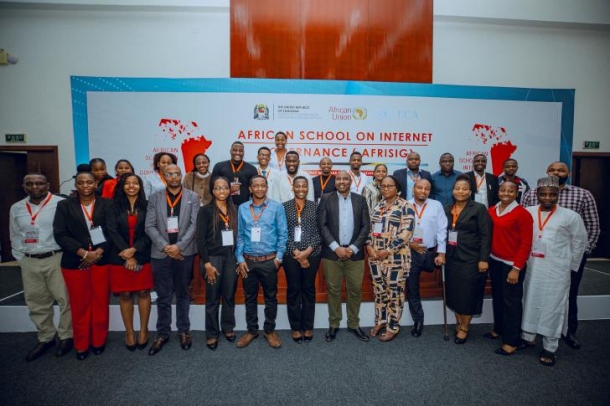
We built the holistic security of feminists and women human rights defenders (WHRDs) across regions in the Global South. Defenders, organisations and networks developed new services oriented towards resilience, security and care, including Burmese WHRDs in exile, who became peer-led protectors for holistic security, and APC member Point of View, which strengthened the capacity of its helpline responders, leading to more effective support for digital violence survivors. As part of the Safety for Voices initiative, APC and its partners IM-Defensoras and Urgent Action Fund worked with WHRDs in 42 countries across the Global South to build their security capacity and develop rapid response support to confront digital violations of defenders. A significant focus in 2025 was deepening collaboration between IM-Defensoras and digital protection teams to strengthen the documentation of the psychosocial impacts of digital attacks – a core element of the feminist holistic protection strategy – in its registry of attacks on Mesoamerican WHRDs. The queer movement in Bangladesh meanwhile built its capacity in digital security and digital rights trainings through local Feminist Tech eXchanges and introduced digital safety skills building and digital rights and governance discourse into its work. These results were made possible through a multi-year partnership with APC’s Our Voices, Our Futures consortium.
We supported the development and sharing of security toolkits in Latin America and Asia. Across projects, we supported the creation and exchange of tools for holistic security among organisations and activists. In Latin America, TEDIC shared its integrated SAFETAG-plus-emotional-security methodology with other civil society organisations; Media Matters for Democracy in Pakistan developed a digital security methodology for transgender people in their region; and the regional and country teams of the UN Refugee Agency in South and Southeast Asia now use a toolkit for monitoring hate speech and disinformation targeting refugee populations.
Image credit: Common Room
We developed the capacity of communities to run community networks. Across regions, APC worked with its partners to build the capacity to run community-centred connectivity networks sustainably and in a way that benefits the rights of communities and their territories. New editions of the Blended Training for ICT Network Managers in Indigenous and Rural Communities were launched in Latin America and Africa. Organised by the International Telecommunication Union (ITU), Rhizomatica, and regional partners the African Advanced Level Telecommunications Institute (AFRALTI) and REDES A.C., and supported by the Local Networks (LocNet) initiative, the programmes strengthened local capacity to build and manage community networks. The Africa edition convened 44 participants from 18 countries, while the edition in Latin America gathered 85 participants, involving community communicators from 14 countries. Meanwhile, the Foundation for Media Alternatives emphasised the importance of integrating digital safety into community connectivity efforts during the Philippine Community-Centred Connectivity Initiatives Bootcamp, held in November. The three-day bootcamp convened community network builders, social enterprise leaders and digital rights advocates to strengthen inclusive and community-driven approaches to connectivity. In Indonesia, APC member Common Room supported multiple community networks in their country. This article features the different ways they are connecting underserved communities, while building the local capacity of men and women. Participants in the 2025 community-centred connectivity initiatives bootcamp organised by APC in Brazil also developed capacities to work together as a gender collective within the Brazilian community network movement. Lastly, the LocNet initiative supported a growing community of practice focused on the development of solar-powered sensors for agricultural, environmental and territorial monitoring.
We encouraged organisations to work with FLOSS. Across projects, we promoted FLOSS as a sustainable software choice, raising awareness of FLOSS projects and funding opportunities in the Global South. A key success story was Astraea's technical labs for human rights defenders developing its open source infrastructure with APC’s support. We also created the "Building a Free Internet of the Future" series of articles together with our NGI Zero partners to promote FLOSS and sustainable computing. During 2025, the series featured 10 conversations with representatives of projects supported by NGI Zero grants. It highlighted alternatives to YouTube, free software to support self-organising in local communities, and how to extend the life of consumer electronics. Meanwhile, through subgrant support, our member Open Culture Foundation collated open source safety tools to support human rights defenders in Taiwan.

Amongst other impacts, through subgrant support:

We built the capacity of community-centred connectivity initiatives across regions. In Kenya, Tanda CBO used a subgrant to train and mentor 11 community organisations. This resulted in 13 licence applications and four successful licences. Individuals trained through the programme went on to take key leadership positions within the newly formed Association of Community Networks in Kenya. Also in Kenya, we helped the Arid Lands Information Network (ALIN) connect 200 more members of the community to its second community network set up in the country. Meanwhile, in South Africa, Zenzeleni Networks conducted an audit of six community networks, resulting in them collectively registering as a public benefit organisation and strengthening their sustainability. In Colombia, our member Colnodo worked with community networks to co-design environmental monitoring kits. Communities used these kits to collect local data on deforestation, agricultural burning, and air and water quality, demonstrating how connectivity can serve environmental stewardship. We also ran a community network bootcamp in the Philippines through the Institute for Social Entrepreneurship in Asia and Philippine Rural Reconstruction Movement with support from the Internet Society, which brought together 25 participants over three days to share their experiences, map structural barriers, co-learn technical skills and initiate action plans grounded in local knowledge. We also supported the work of rural community case managers in Nigeria through our member Fantsuam Foundation. The case managers live in the communities they support and are trained to act as first responders and first aid providers to residents.
We strengthened the response to technology-facilitated gender-based violence (TFGBV) in Asia and supported strategic planning on digital rights and feminist organising in Uganda. In Bangladesh, we tackled the threat of TFGBV through a project run by our member Bangladesh NGOs Network for Radio and Communication. The project aimed to support approximately 30 university teachers from 15 universities and 50 other stakeholders in an effort to establish stronger frameworks for preventing and responding to gender-based digital violence. In India, we supported APC member Point of View in an initiative that aimed to strengthen the responses available to women, including young women from low-income communities, sex workers, LGBTQ+ persons and persons with disabilities, when they face image-based abuse. We also supported the organisational strategic planning of our member Pollicy in Uganda. This involved a three-day staff retreat to allow the organisation to navigate a leadership transition while responding to complex global and regional challenges affecting digital rights and feminist organising.
We helped journalists and community media, as well as human rights defenders, in Latin America and Asia. We provided emergency support to our member Media Matters for Democracy to sustain its Digital Rights Monitor during a period of severe financial strain; it remains Pakistan’s only digital rights journalistic platform. In Mexico, REDES A.C. created a forum for Indigenous media outlets and civil society to build a shared agenda that allowed the development of an enabling regulatory environment in the country. We also supported journalists and human rights defenders in Bangladesh and Taiwan. We increased their online safety in Bangladesh through supporting a capacity-building initiative aimed at strengthening the digital resilience of both national and grassroots-level actors, developed by our member Voices for Interactive Choice and Empowerment (VOICE). Meanwhile, our member Open Culture Foundation raised awareness about open source digital safety tools for human rights defenders in Taiwan.
We supported advocacy for privacy rights and a campaign against internet shutdowns during elections in Uganda and Tanzania. In Uganda, Unwanted Witness worked to ensure that digital technologies used in elections respected the right to privacy, while in Tanzania, our member Zaina Foundation campaigned against internet shutdowns during their general elections in October.
Our members also launched digital training initiatives, building capacity among the youth and the judiciary, as well as in entrepreneurship and innovation in underserved communities. In Colombia, Colnodo trained 150 students from schools in Bogota in digital safety through its Digital Safety School, while a Digital Security School run by eQualitie and DreamSpace Academy was supported in Sri Lanka. The school is dedicated to empowering underserved communities through education, innovation and entrepreneurship, and also provides digital security services to journalists, media organisations, activists and human rights defenders across the country. In Nigeria, the Centre for Information Technology and Development (CITAD) worked with its eRights partners and trained junior judges and lawyers at municipal level to strengthen the judicial response to digital rights violations in the country. Meanwhile, in Venezuela, APC member EsLaRed received support to build an online digital repository of training resources.
We strengthened civil society’s knowledge of artificial intelligence (AI) and its implications for policy, legislation, gender and advocacy. With APC support, the Digital Justice Network launched their report “Research on AI Policy and Issues in Key Areas in South Korea: Public Sector, Law Enforcement, Education and Social Welfare”, which analyses the standards for AI regulation, implementation status, and actual or potential problems in key areas including public administration, law enforcement, education and social welfare. The Digital Justice Network also launched the “Generative AI Guide for Civil Society” that originated from the realisation that civil society organisations and activists need help in establishing generative AI policies and properly using these tools. Meanwhile, the Centre for Multilateral Affairs released the report “Examining the Governance Frameworks and Gender Dimensions of Artificial Intelligence Policy in Uganda", as well as the policy brief “Advancing Inclusive and Contextually Relevant AI Policies in Uganda", which offers recommendations such as ensuring equitable representation of women and marginalised groups in AI policy-making bodies.
We funded environmental justice and sustainable computing through our members working in Spain and South Africa. Long-term member Pangea used a small grant to strengthen its eReuse initiative, and to explore building common agendas on digital technologies and environmental justice in the APC community. Meanwhile, Computer Aid International built its staff and marketing capacity in South Africa to increase its distribution of second-hand devices in the country.
We helped raise awareness of technology and mental health issues in Paraguay. Mente en Línea-Plus is an initiative from APC member TEDIC aimed at updating and expanding educational materials on mental health and technology. In collaboration with PsicoFEM and the Paraguayan Association of Psychiatry, their project raised awareness of data detox, techno-stress and screen time, as well as children's privacy and the impact of digital exposure on their mental health.

Member grants

APC's subgranting programme with support from the Swedish International Development Cooperation Agency (Sida)

2025 was the ninth year of APC's subgranting programme, implemented with support from the Swedish International Development Cooperation Agency (Sida). This was the second year of the 2024-2027 subgrants strategic period. These subgrants are aimed at enabling our member organisations to contribute towards achieving APC’s strategic plan.

Three types of grants were made available: advocacy and institutional strengthening (previously: research and campaign) grants, impact grants, and Member Engagement and Travel Fund (METF) grants.

During 2025, total financial support of USD 642,350 was shared with APC members to implement 74 projects.

Additionally, a Member Solidarity Fund (MSF) grant was initiated to support APC network members in urgent situations, following the USAID funding freeze that was announced early in 2025. Two applications were approved for that grant, with a total budget of USD 19,583.

Our members

In December 2025, APC had 74 organisational members and 44 individual associates active in 58 different countries, with the majority based in the Global South.

APC member organisations

Individual associates

  • Argentina

    • Damian Loreti
  • Australia

    • Andrew Garton
    • Mitra Ardron
    • Sylvia Cadena
  • Bosnia and Herzegovina

    • Aida Mahmutovic
  • Brazil

    • Vera Vieira
  • Canada

    • Stéphane Couture
  • Colombia

    • Mario Morales
  • Congo, Democratic Republic of

    • Patience Luyeye
  • Czech Republic

    • Honza Malík
  • Ethiopia

    • Melaku Girma
  • Guinea

    • Serge Ziehi
  • India

    • Gayatri Khandhadai
    • Japleen Pasricha
  • Italy

    • Gillo Cutrupi
    • Leonardo Maccari
  • Jordan

    • Inam Ali
  • Kenya

    • Muriuki Mureithi
  • Malaysia

    • Gayathry Venkiteswaran
    • Jac sm Kee
  • Mexico

    • Olinca Marino
  • Nepal

    • Shubha Kayastha
  • Netherlands

    • Rolf Kleef
  • New Zealand

    • Joy Liddicoat
  • Paraguay

    • Arturo Bregaglio
  • Peru

    • Eiko Kawamura
  • South Africa

    • Anriette Esterhuysen
    • Towela Nyirenda Jere
  • South Africa/Germany

    • Alex Comninos
  • Spain

    • Pablo Accuosto
    • Sol Luca de Tena
  • Sweden

    • Helen Belcastro
  • Tunisia

    • Rafik Dammak /رفيق دمق
  • Uganda

    • Brian Byaruhanga
    • Helen Nyinakiiza
  • United States

    • Ariel Barbosa
    • Avri Doria
    • Jane Coffin
    • Mai Ishikawa Sutton
    • Mallory Knodel
    • Mark Graham
  • Zimbabwe

    • Koliwe Majama
    • Natasha Msonza
    • Patience Mandishona

Governance

Board of directors

  • Leandro Navarro, Associació Pangea - Coordinadora Comunicació per a la Cooperació, Spain (chair)
  • Sylvie Siyam, PROTEGE QV, Cameroon (vice-chair)
  • Poncelet Ileleji, Jokkolabs Banjul, Gambia (secretary)
  • Neema Iyer, Pollicy, Uganda (treasurer)
  • Dinesh T B, Servelots, India
  • Michel Lambert, eQualitie, Canada
  • Pavel Antonov, BlueLink.net, Bulgaria
  • Chat Garcia Ramilo, APC, Philippines (executive director)

Council representatives

Staff team in 2025

  • Executive director: Chat Garcia Ramilo, Philippines
  • Operations director: Karen Banks, Australia
  • Global governance advocacy lead manager: Valeria Betancourt, Spain
  • Co-manager: Kathleen Diga, South Africa
  • Co-manager: Carlos Rey-Moreno, Spain
  • Community care and gender engagement lead: Cynthia El Khoury, Canada
  • Communications associate: Débora Prado, Brazil (until May 2025) *
  • Communications associate: Florencia Roveri, Argentina (as of May 2025) *
  • Institutional strengthening lead and senior finance coordinator: Fatima Bhyat, South Africa **
  • Local access and finance specialist: Michael Jensen, Portugal
  • Programme administrator: Ndunge Kiundi, Kenya
  • Policy and regulation lead: Josephine Miliza, Kenya

*Located in both the Local Access Programme and the Communications team.
** Located in both the Local Access Programme and the Finance team.

  • Manager: Paula Martins, Canada (until June 2025)
  • Manager: Pavitra Ramanujam, India (as of August 2025)
  • Global policy advocacy lead: Verónica Ferrari, Argentina
  • Asia digital rights lead: Pavitra Ramanujam, India (until July 2025)
  • Administrative associate: Cho, Thailand
  • Finance officer: Gladys, Philippines
  • Africa regional strategy lead: Peace Oliver Amuge, Uganda
  • Environmental justice strategy lead: michelle shawna, Canada
  • Co-manager: Katerina Fialova/Kača, Czech Republic
  • Co-manager: namita aavriti, India
  • WRP research lead and Feminist Internet Research Network (FIRN) project coordinator: Tigist Hussen, South Africa
  • Feminist Internet Research Network (FIRN) project administrator: Diana Bichanga, Kenya
  • GenderIT editor and WRP content coordinator: Hija Kamran, Canada
  • Feminist Tech eXchange (FTX) coordinator: Narrira Lemos de Souza, Brazil
  • Our Voices, Our Futures senior project co-coordinator: Sheena G. Magenya, Kenya/South Africa
  • Our Voices, Our Futures project co-coordinator: Smita V., India
  • Our Voices, Our Futures project administrator: Catherine Lwangu, Kenya
  • Senior project coordinator: Erika Smith, Mexico
  • Women's rights policy advocacy coordinator: Karla Velasco Ramos, Mexico
  • Consortium manager: Sadaf Khan, Pakistan
  • Finance and administration coordinator: Muhammad Ali, Pakistan
  • Subgranting coordinator: Carla Vitória Barbosa, Brazil (until October 2025)
  • Administrative coordinator: Shamiso Mahomva, Zimbabwe
  • Manager: Flavia Fascendini, Argentina
  • Media outreach lead: Leila Nachawati Rego, Spain (until August 2025)
  • Language coordinator: Lori Nordstrom, Uruguay
  • Publications and multimedia coordinator: cathy c, Taiwan/Canada
  • GISWatch coordinator and writer: Maja Romano, Canada
  • Lead editor: Débora Prado, Brazil (as of February 2025)
  • Communications associate: Débora Prado, Brazil (until May 2025) *
  • Communications associate: Florencia Roveri, Argentina (as of May 2025) *

* Located in both the Local Access Programme and the Communications team.

  • Manager: Karel Novotný, Portugal
  • Subgrants coordinator: Vassilis Chryssos, Greece
  • Community engagement and communications coordinator: Red Tani, Philippines
  • Resource mobilisation coordinator: Natalia Tariq, Pakistan
  • Executive administrator: Liy Yusof, Southeast Asia
  • Senior MEL specialist: Kemly Camacho, Costa Rica
  • Manager: Herman Ngure, Kenya
  • Senior finance officer: Fatima Bhyat, South Africa *
  • Finance coordinator: Christine Nyambo, Zimbabwe
  • Finance coordinator: Peris Kahure, Kenya (interim as of August 2025)
  • Senior finance coordinator and Netsuite administrator: Nino Chubinidze, Georgia

* Located in both the Local Access Programme and the Finance team.

  • People and culture manager: Delphine Ménard, Germany
  • Administrative officer: Eunice Mwesigwa, South Africa
  • Operations manager: hvale vale, Italy
  • Systems and information coordinator: Shivi, India
  • Convenings lead: Pamela Ariza, Chile
  • APC project management system co-lead developer: Mirto, Czechia (as of November 2025)
  • Manager: Roxana Bassi, Argentina
  • Technical systems developer: Adolfo Dunayevich Garber, Mexico
  • Senior technical officer: Maja Kraljic, Slovenia
  • Technical system administrator (sysadmin): Mirto, Czechia (until October 2025)
  • Online capacity building specialist and technical support: Avinash Kuduvalli, India
  • Technical infrastructure coordinator: igu, France
  • Website developer: Liz Probert, United Kingdom
  • Senior advisor on global and regional internet governance: Anriette Esterhuysen, South Africa
  • GISWatch editor: Alan Finlay, Argentina/South Africa

Finances

Financial supporters

  • Astraea Foundation
    • CommsLabs Program for Eastern Europe and Central Asia (USAID sub-award)
  • Dutch Ministry of Foreign Affairs
    • Sustaining Defenders through Feminist Holistic Security (SDFHS)
  • Dutch Ministry of Foreign Affairs, through the Directorate of Development Cooperation (DGIS) FLOW II Fund via Creating Resources for Empowerment in Action (CREA)
    • Our Voices, Our Futures
  • Equality Fund
    • Strengthen feminist tech infrastructures
  • EU Delegation of the European Union to Thailand (EIDHR)
    • Unpacking gendered disinformation in India – Deepening understanding and exploring counter measures
  • European Commission – EU
    • Next Generation Internet Zero (NGI0)
  • Ford Foundation
    • General support and core and project support for institutional strengthening
  • Foreign Commonwealth and Development Office (FCDO)
    • Supporting Community-Led Approaches to Addressing the Digital Divide
    • Gender Matters in Cybersecurity
  • Foundation for a Just Society (FJS)
    • Restricted communications support to APC’s Women’s Rights Programme project GenderIT
  • General Secretariat of the Organization of American States (GS/OAS)
    • Cyber Security Program
  • German Corporation for International Cooperation (GIZ)
    • African School on Internet Governance
  • Global Fund for Women (GFW)
    • General support grant
  • ICANN
    • Support for the African Internet Governance Forum and African School on Internet Governance
  • International Development Research Centre (IDRC)
    • Making a Feminist Internet Research Network
    • Resistance and Resilience: Collaborative responses to online attacks on environmental defenders
  • Internet Society (ISOC)
    • Support for the African School on Internet Governance and Community Networks
  • Luminate
    • Southeast Asia Digital Rights Collaborative (DRC)
  • Oak Foundation
    • Unrestricted support to the APC Women's Rights Programme
  • Open Society Institute
    • Support for community networks
  • Public Internet Registry
    • African School on Internet Governance
  • Stiftung Auxilium Foundation managed by Porticus Foundation
    • Reclaim Your Rights: Strengthening the digital rights movement in Asia
  • Swedish International Development Cooperation Agency (Sida)
    • Core support for the APC Strategic Action Plan 2024-2027
  • United Nations High Commissioner for Refugees (UNHCR)
    • Impact of misinformation, disinformation and hate speech is mitigated
  • United Nations New York Office
    • Support for the African Internet Governance Forum
  • USAID (sub-award through Strathmore University)
    • Expand and amplify responsive evidence-based internet freedom legal and policy advocacy in the Global South
  • Wellspring Philanthropic Fund (WPF)
    • Women’s Rights; Online Gender-Based Violence Research; Social and Environmental Justice
  • Asia Pacific Network Information Centre Foundation (APNIC)
    • Support for community networks
  • Global Partners Digital
    • Advancing Digital Inclusion and Shaping Inclusive and Rights-Respecting Norms
  • Goldman Sachs Philanthropy Fund
    • Strategy Support Fund

APC financial statements for 2025
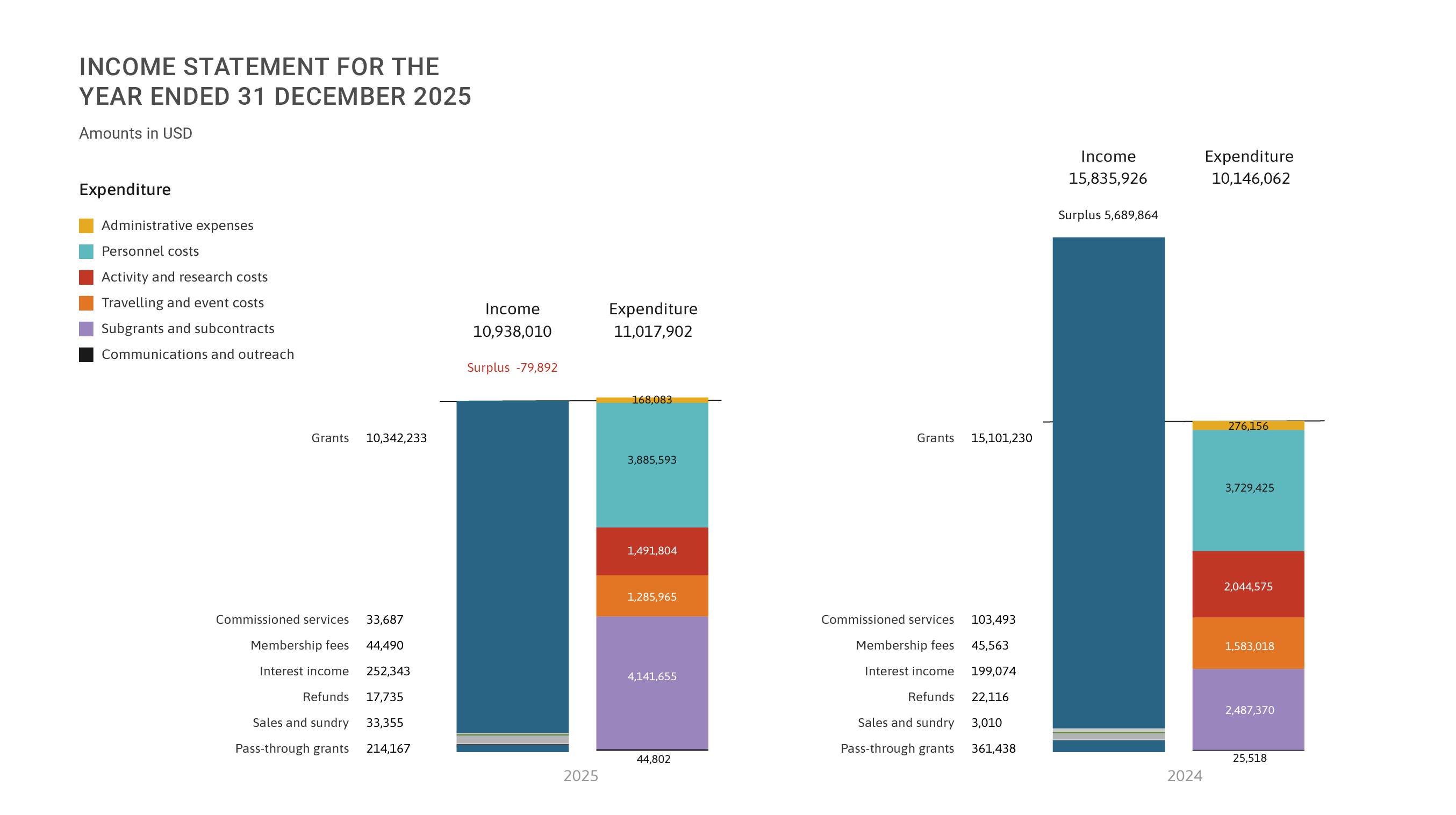
Income statement for the year ended 31 December 2025

Balance sheet at 31 December 2025

2025 (USD) 2024 (USD)
ASSETS 12,884,623 13,057,467
Non-current assets - -
Property and equipment - -
Current assets 12,884,623 13,057,467
Accounts receivable 610,431 105,845
Partners' receivable 203,435 -
Cash and cash equivalents 11,924,196 12,521,535
Grant receivables 146,561 430,087
TOTAL ASSETS 12,884,623 13,057,467
 
FUND BALANCES AND LIABILITIES 12,884,623 13,057,467
Reserves and sustainability fund 6,455,604 6,535,495
Sustainability fund 455,604 450,542
Programme funds - 37,743
General fund - 47,210
Strategy fund 6,000,000 6,000,000
Current liabilities 6,429,019 6,521,972
Accounts payable 606,540 821,752
Deferred income 5,738,983 5,625,545
Provision for leave pay 83,496 74,675
TOTAL RESERVES AND LIABILITIES 12,884,623 13,057,467

Income statement for the year ended 31 December 2025

2025 (USD) 2024 (USD)
INCOME 10,938,010 15,835,926
Grants 10,342,233 15,101,230
Other income 381,610 373,257
Commissioned services 33,687 103,493
Membership fees 44,490 45,563
Interest income 252,343 199,074
Refunds 17,735 22,116
Sales and sundry 33,355 3,010
Pass-through grants 214,167 361,438
 
EXPENDITURE 11,017,902 10,146,062
Administrative expenses 168,083 276,156
Personnel costs 3,885,593 3,729,425
Activity and research costs 1,491,804 2,044,575
Travelling and event costs 1,285,965 1,583,018
Sub grants and sub contracts 4,141,655 2,487,370
Communications and outreach 44,802 25,518
 
SURPLUS / (DEFICIT) FOR THE YEAR (79,892) 5,689,864

Note: Detailed information is available in the audited financial statements for 2025.